


Screw Land 3D
4.8884.00 Reviews
App Specs
- Version
- 2.23.6
- Updated On
- License
- Free
- Downloads
- 1,000,000+
- Developer
- PixOn Games
- Categories
- Puzzle
- Platform
- Android
Screenshots
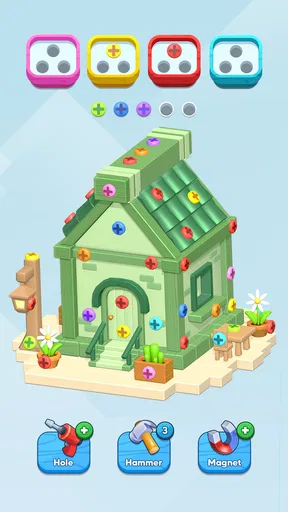
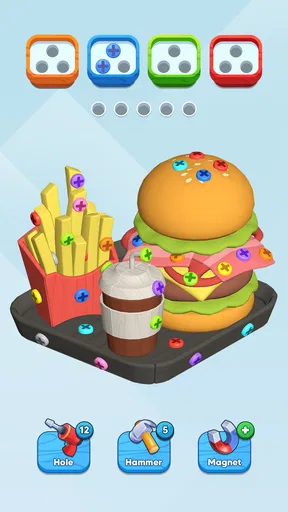
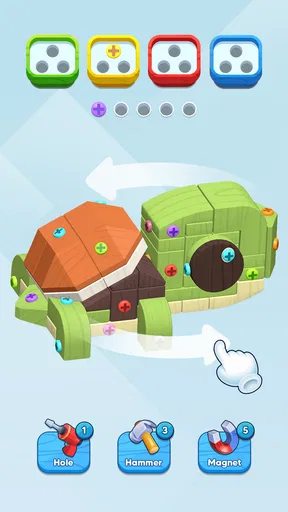
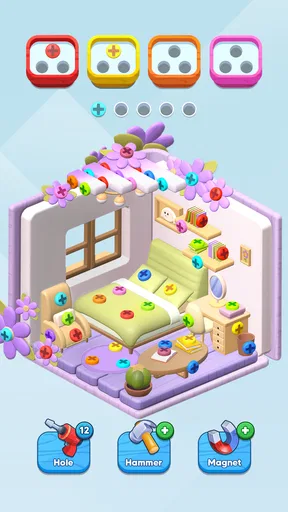
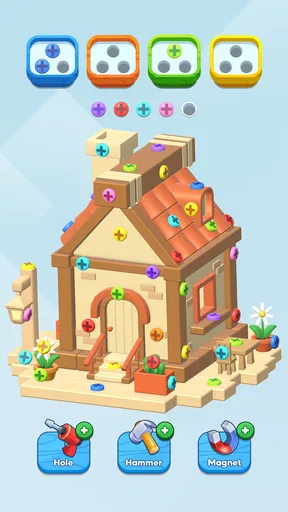
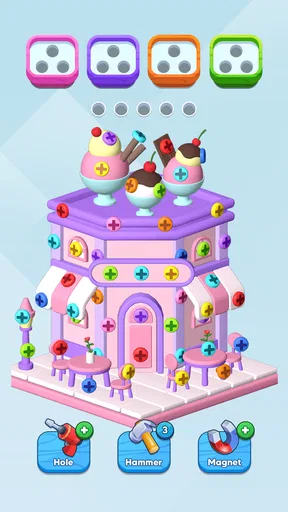
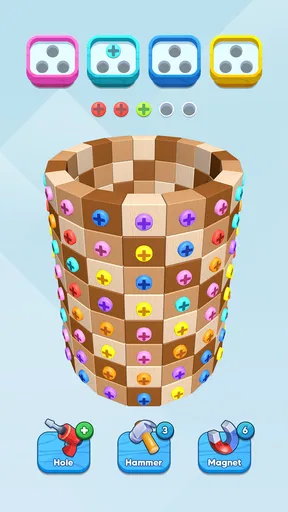
 Analysis by AppCompare
I tend to judge a mobile puzzle game by a simple question: does it give me a satisfying problem to think through without demanding a long, uninterrupted session? Screw Land 3D is aimed at that sort of player. It turns familiar hardware into a spatial challenge, asking you to sort pieces, work out how they fit, and make deliberate moves rather than simply tap through a quiz. That gives it a tactile feel that stands apart from word puzzles and match-based games.
It is a free puzzle game from PixOn Games, with an Everyone age rating. Its average rating is 4.8 from around 26,000 ratings, and it has passed one million installs. Those figures suggest that the compact screw-and-object concept has found an audience, but the more useful question is whether that style suits the way you like to play. For me, its appeal is strongest when I want a focused little challenge and can give the screen my attention.
Choosing a puzzle that suits your mood
The central decision is whether you enjoy manipulating objects in space. Here, progress comes from figuring out what should move and in what order, not from finding a hidden word or matching a run of colored pieces. If you like noticing how components relate to one another, the premise has an immediate pull. If you prefer puzzles with a clear answer you can reach through logic alone, the physical arrangement may feel less predictable.
That distinction matters in everyday use. I can imagine opening it during a quiet break, completing a short stretch of play, and putting the phone away without needing to remember a story or manage a complicated setup. It is less suited to moments when I am walking, talking with someone, or otherwise unable to keep my eyes on the screen: judging a 3D arrangement calls for more attention than a quick, mostly automatic phone game.
What makes its puzzle style appealing
The game’s strongest idea is the way screws and bolts turn spatial reasoning into something concrete. Instead of treating a puzzle as a flat grid, it gives the problem a sense of depth and order. Thinking ahead can matter, because a move that seems convenient may affect what you can reach or handle next. I find that more engaging than repeatedly making the first available match, especially when I have enough time to inspect the layout before acting.
The basic interaction is approachable: swiping and tapping let you move and place pieces. That keeps the barrier to entry low, even for someone who has not played many mechanical puzzles. Yet simple controls do not make every decision simple. When a layout becomes awkward to read, I have to pause, look at the pieces from the available view, and consider the sequence rather than relying on quick reflexes. That rhythm is part of the appeal, though it can also make a level feel slower than a conventional casual puzzle.
Where the challenge earns its place
Levels build on the central idea and introduce challenges that call for planning as well as careful placement. I like that a puzzle can reward a second look: when an apparent dead end appears, it is often worth reconsidering the order of moves before deciding that the arrangement is impossible. A useful habit is to identify which pieces seem to constrain the rest, then work out whether clearing or shifting one of them opens a better route. That turns trial and error into a more deliberate process.
Worth Reading Before You Choose

EA SPORTS FC Mobile 26 Is a Bigger Football Game, but It Takes Time

Flipboard Shows What News Apps Must Do Beyond the Feed

Switching to Android Auto Means Rethinking Your Driving Routine

Google Calendar Makes a Crowded Week Easier to Manage

Ludo King Makes the Most of the Minutes Between Plans

Baby Panda World Brings Quick Play to Modern Phones, but Its Game Library Feels Busy
The game is a natural fit for people who enjoy small spatial problems, hands-on object puzzles, and an occasional nudge to think a few moves ahead. It may be a less satisfying choice for players who want a long narrative, competitive matches, or a steady stream of high-speed action. The point is not to rush through a board; it is to understand how the pieces relate. If that kind of concentration feels relaxing rather than like homework, the design has a good chance of clicking.
How it compares with other mobile puzzles
Compared with match-three games, this is less about scanning for a quick combination and more about understanding a physical arrangement. Compared with word and number puzzles, it asks for visual-spatial judgement rather than vocabulary or arithmetic. And next to broad jigsaw-style games, the hardware theme gives each move a more mechanical character. None of those alternatives is inherently better; they serve different moods. I would choose a word puzzle when I want a quieter, more abstract task, and this one when I want to inspect and manipulate a compact 3D problem.
There is also a trade-off in how readable the challenge can be. A flat board makes relationships easy to scan, while a three-dimensional setup can make it harder to judge where a component sits. If you are playing on a small phone screen, taking a moment to inspect the whole arrangement before acting is more useful than tapping rapidly. The camera can occasionally make precise placement tricky, so patience matters more here than it would in a puzzle where every object stays in a fixed, flat position.
Small habits that make play smoother
When I reach a level that seems stubborn, I would avoid changing several pieces at random. Instead, I would make one move, check what it has opened or blocked, and use that result to decide the next step. This keeps the puzzle legible and makes it easier to recover from a poor choice. If a placement looks uncertain because of the camera angle, pausing to re-check the visible relationships is preferable to treating a missed tap as a logic mistake.
It also helps to choose a moment when you can focus. A short session during a break can work well, but the game is not ideal as background entertainment if you are trying to follow a conversation or watch something else. The interaction is simple enough to pick up, while the spatial judgement is demanding enough that distracted play can turn a satisfying puzzle into unnecessary frustration. I would keep it for those little pockets of time when I can actually look at the board.
Practical expectations before installing
The game is free to start, with optional in-app purchases priced from $1.99 to $99.99 per item. That is worth keeping in mind if you prefer games with no paid extras at all; check the purchase prompts carefully and use your device’s purchase controls if you share a phone with a child. The age rating is Everyone, but that does not remove the need for a parent or guardian to decide whether optional spending is appropriate for their household.
For Android users, the current version is 2.13.2 and the minimum operating system is Android 6.0. That makes the compatibility question straightforward: check the Android version on the device before downloading. The game is free, but free-to-play does not necessarily mean every optional item is free, so anyone who wants to avoid spending should treat purchases as separate choices rather than part of the core appeal.
One reasonable question is whether it works for a beginner. The controls are simple and the puzzle premise is easy to understand, so a newcomer to this style can start without needing specialist knowledge. The more important question is whether you enjoy thinking spatially; familiarity with hardware is not the point, but patience with arrangements and move order is. If you find yourself enjoying the act of inspecting a layout, you are likely to get more from it than someone who only wants instant answers.
Where the experience can stumble
The camera is the clearest source of friction. When the view makes it hard to judge a piece’s position, a precise move can feel fiddly even if the underlying puzzle is understandable. That is a meaningful limitation for anyone who dislikes manipulating objects on a touchscreen. I would not recommend it as the first choice for a player who wants every interaction to be instantly clear, particularly on a smaller display or in a rushed setting.
I also would not choose it to replace every other kind of puzzle. Its mechanical, spatial focus is its identity, so it naturally offers a narrower kind of mental exercise than a collection of varied puzzle formats. Someone who wants story progression, social competition, or a wide mix of daily challenges may be happier with another category. Here, the reward comes from working through this particular style of problem, not from a broad range of modes.
Hints are another point to consider. The original experience can leave you wanting guidance when you are completely stuck, and a hint system would make those moments gentler. Until then, the most practical approach is to step back and reassess the sequence rather than repeatedly forcing the same move. That may suit players who enjoy solving independently, but it can frustrate anyone who expects the game to offer a clear rescue when progress stalls.
Who should give it a try
I would recommend it to someone who likes hands-on logic puzzles and wants a mobile game that can occupy a short, focused session. It is especially appealing if flat grids have started to feel repetitive and you want to judge objects by their placement and relationship to other pieces. A realistic use case is a quiet coffee break: open a level, study the arrangement, make a few considered moves, and stop when you need to return to your day.
I would suggest skipping it if your preferred phone games are mostly fast, reflex-driven, or easy to play without looking closely. It is also not the best match if a camera that occasionally complicates placement is a deal-breaker, or if you want a hint-led experience whenever you hit a wall. Choosing a different puzzle style is not missing out; it is simply choosing the kind of thinking that feels enjoyable to you.
A measured recommendation
Overall, I see Screw Land 3D as a distinctive option in the puzzle category rather than an all-purpose casual game. PixOn Games has built its appeal around a clear mechanical theme and approachable touch controls, while the three-dimensional layouts give the solving process more texture than a typical flat-board puzzle. Its strong audience response is encouraging, but I would base the decision on whether spatial problem-solving sounds fun to you, not on popularity alone.
If you want a free game for attentive, bite-sized puzzle sessions and you are happy to take your time with an awkward arrangement, I think it is worth trying. If you would rather have quick matches, words, numbers, or more guidance when stuck, another puzzle format will probably fit better. My recommendation is therefore specific: choose it for the pleasure of inspecting and rearranging a mechanical puzzle, and pass if that process sounds more fiddly than satisfying.
If you're looking for a game that combines puzzling challenges with a dash of creativity, then Screw Land 3D might just be the perfect pick for you. This game invites players into a world where screws, bolts, and gears are more than just hardware— they’re the keys to solving intricate puzzles. Let me walk you through my experience with this delightful app.
The Game Mechanics
Screw Land 3D is all about manipulation and strategy. The main goal is to assemble various structures by strategically placing screws and bolts. It's like a 3D jigsaw puzzle, but with a twist. The controls are intuitive; you simply swipe and tap to move and place the pieces. The game gradually ramps up in difficulty, which keeps you on your toes and makes every level feel fresh and challenging.
Visuals and Graphics
One of the first things you'll notice about Screw Land 3D is how visually pleasing it is. The graphics are crisp and vibrant, making each puzzle a joy to engage with. The developers have done a stellar job in creating a 3D environment that feels both immersive and functional. The animations are smooth, and the transitions between levels are seamless, which adds to the overall polished feel of the app.
Gameplay Experience
Each level in Screw Land 3D presents a unique challenge. Some puzzles require you to think several steps ahead, while others test your speed and precision. The variety in gameplay keeps it exciting. What I love most is how the game subtly teaches you new mechanics without overwhelming you. It's like having a mini tutorial with every new feature introduced.
Moreover, the game offers various difficulty settings, so whether you're a puzzle novice or a seasoned pro, there’s a level that fits your skills. The satisfaction of tightening that last screw to complete a puzzle is immensely rewarding.
Sound and Music
Another aspect that enhances the experience is the sound design. The soft clicks and whirs as you twist and turn the screws are oddly satisfying. The background music is soothing and complements the gameplay perfectly, making it easy to lose track of time as you delve deeper into the world of Screw Land 3D.
Room for Improvement
While Screw Land 3D is undoubtedly captivating, there are a few areas where it could improve. Occasionally, the camera angles can be a bit tricky, especially when trying to place pieces precisely. A minor tweak in the camera controls could make the gameplay smoother. Additionally, having a hint system could be beneficial for those moments when you’re utterly stuck.
Final Thoughts
All in all, Screw Land 3D is a fantastic addition to the puzzle genre. It offers a fresh take with its unique mechanics and engaging gameplay. Whether you’re looking to kill some time or immerse yourself in a challenging puzzle, this app delivers on all fronts. It’s available for both Android and iOS, so why not give it a whirl? You might just find yourself addicted to the art of screwing— in the best way possible!
Pros
- Engaging and challenging puzzles.
- Colorful and vibrant graphics.
- Intuitive controls for easy play.
- Regular updates with new levels.
- Offline play available.
Cons
- Ads can be intrusive.
- Limited free levels.
- In-app purchases for extras.
- Occasional lag on older devices.
- No multi-player mode.
FAQs for Screw Land 3D
What is the main objective of Screw Land 3D?
Screw Land 3D is a captivating puzzle game where the primary objective is to use various screws and tools to solve intricate mechanical puzzles. Players must strategically maneuver screws into place, unlocking levels that increase in complexity. The game challenges your problem-solving skills and offers a satisfying experience as you progress through its diverse challenges.
Is Screw Land 3D suitable for all age groups?
Yes, Screw Land 3D is designed to be family-friendly and suitable for players of all ages. While younger players might find some levels challenging, the intuitive controls and gradual difficulty curve make it accessible. It’s a great way for families to engage in fun problem-solving activities together, enhancing critical thinking skills.
Does Screw Land 3D require an internet connection to play?
Screw Land 3D can be played offline, making it an excellent choice for users who want to enjoy gaming on the go without worrying about data usage. However, certain features like leaderboards or updates may require an internet connection, enhancing the competitive and social aspects of the game.
Are there in-app purchases in Screw Land 3D?
Yes, Screw Land 3D offers in-app purchases that allow players to enhance their gaming experience. These may include new levels, tools, or cosmetic upgrades. While the game is free to download, these optional purchases provide additional content for players who wish to explore more of what the game has to offer.
What devices are compatible with Screw Land 3D?
Screw Land 3D is available on both Android and iOS platforms, ensuring a wide range of device compatibility. It runs smoothly on most modern smartphones and tablets. To ensure optimal performance, it's recommended to have the latest operating system updates and adequate storage space on your device.


